Correspondence table between Windows kernel version number and system version number (windows 1.0-windows 11)
Original link: https://www.itylq.com/windows-core-and-system-version.html
Release date: 2023-04-24 Migration time: 2026-03-21
1 Each kernel version number of Windows system and its corresponding system version number
| Serial number | Windows kernel version | Windows system version | System bit number | Development code name | Release date |
|---|---|---|---|---|---|
| 1 | - | Windows 1.0 | 16-bit | Interface Manager | 1985-11-20 |
| 2 | - | Windows 2.0 | 16-bit | Interface Manager | 1987-12-09 |
| 3 | - | Windows 3.0 | 16-bit | Interface Manager | 1990-05-22 |
| 4 | Windows NT 3.1 | Windows NT 3.1 | 16-bit/32-bit | NTOS/2 | 1993-07-27 |
| 5 | Windows NT 4.0 | Windows 95 | 16-bit/32-bit | Chicago | 1995-08-24 |
| 6 | Windows NT 4.1 | Windows 98 | 16-bit/32-bit | Memphis | 1998-06-25 |
| 7 | Windows NT 4.9 | Windows Me | 16-bit/32-bit | Millennium | 2000-09-14 |
| 8 | Windows NT 5.0 | Windows 2000 | 32-bit | Windows NT 5.0 | 1999-12-19 |
| 9 | Windows NT 5.1 | Windows XP | 32-bit | Windows Whistler | 2001-08-25 |
| 10 | Windows NT 5.2 | Windows Server 2003 | 32-bit | Windows Whistler | 2003-03-28 |
| 11 | Windows NT 5.2 | Windows Server 2003 R2 | 32-bit | Windows Whistler | 2005-12-06 |
| 12 | Windows NT 6.0 | Windows Vista | 32-bit/64-bit | Windows Longhorn | 2006-11-30 |
| 13 | Windows NT 6.0 | Windows Server 2008 | 32-bit/64-bit | Windows Longhorn | 2008-02-27 |
| 14 | Windows NT 6.1 | Windows 7 | 32-bit/64-bit | Windows Seven | 2009-10-22 |
| 15 | Windows NT 6.1 | Windows Server 2008 R2 | 64-bit | Windows Longhorn | 2009-10-22 |
| 16 | Windows NT 6.2 | Windows 8 | 32-bit/64-bit | Windows State | 2010-10-26 |
| 17 | Windows NT 6.2 | Windows Server 2012 | 64-bit | Windows Server 8 | 2012-09-04 |
| 18 | Windows NT 6.3 | Windows Server 2012 R2 | 64-bit | Windows Server 8 | 2013-06-25 |
| 19 | Windows NT 6.3 | Windows 8.1 | 32-bit/64-bit | Windows Blue | 2013-10-17 |
| 20 | Windows NT 10.0 | Windows 10 | 32-bit/64-bit | Threshold | 2015-01-21 |
| 21 | Windows NT 10.0 | Windows Server 2016 | 64-bit | RedStone | 2016-10-13 |
| 22 | Windows NT 10.0 | Windows 11 | 32-bit/64-bit | Sun Valley | 2021-06-24 |
| 23 | Windows NT 10.0 | Windows Server 2022 | 64-bit | Iron | 2021-11-05 |
2 Content Analysis
1. Windows development history and kernel evolution:
(1) Windows 1.0-windows 3.0 is a command-line operating system based on MS-DOS released during the cooperation between Microsoft and IBM;
(2) In 1993, the cooperative relationship between Microsoft and IBM broke down. Microsoft renamed the NT OS/2 system they had jointly developed to Windows NT 3.1. A total of 4 versions were released between Windows NT 3.1 and Windows NT 4.0;
(3) In 1995, the Windows NT system stopped being released, and system features were integrated into the Windows NT 4.0 kernel. All subsequent Microsoft Windows systems, such as Windows 95, 98, 2000, Windows XP, Windows 7, Windows 10, Windows 11 and others are developed based on the Windows NT kernel.
2. Evolution of Windows system version digits:
(1) Windows NT 3.1, released on July 27, 1993, supported pure 32-bit architecture for the first time;
(2) Windows Vista (kernel version Windows NT 6.0) released on November 30, 2006 supports pure 64-bit architecture for the first time;
(3) Since the release of Windows Server 2008 R2 (kernel version Windows NT 6.1) on October 22, 2009, Microsoft has only released ~~32-bit/~~64-bit version of the Server version system.
3 Extensions
**1. Windows kernel version query: ** Enter "ver" in cmd or win+R to open the small running window and enter "winver":
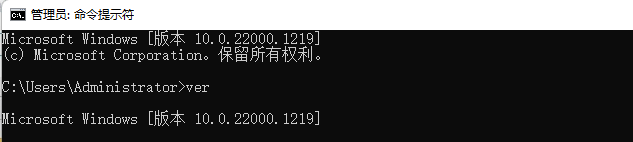
**2. The meaning and difference between x64 and WOW64: ** x64 represents a 64-bit system, and WOW64 represents a 32-bit application running on a 64-bit processor.
**3. The meaning and difference of x86, x86_64, x64, i386, IA32, IA64 and amd64: **
It can be summarized simply by the following equation:
32-bit: x86=i386=IA32 64-bit: amd64=x86_64=x64=IA64
Why are there so many expressions that confuse users to the point where they can’t tell the difference? We have to talk about the grudges between Intel and AMD. Details are omitted, interested friends please check the relevant information by yourself~
This article was moved from WordPress to MkDocs